Kitchen Trends: Finishes, Materials, Colors

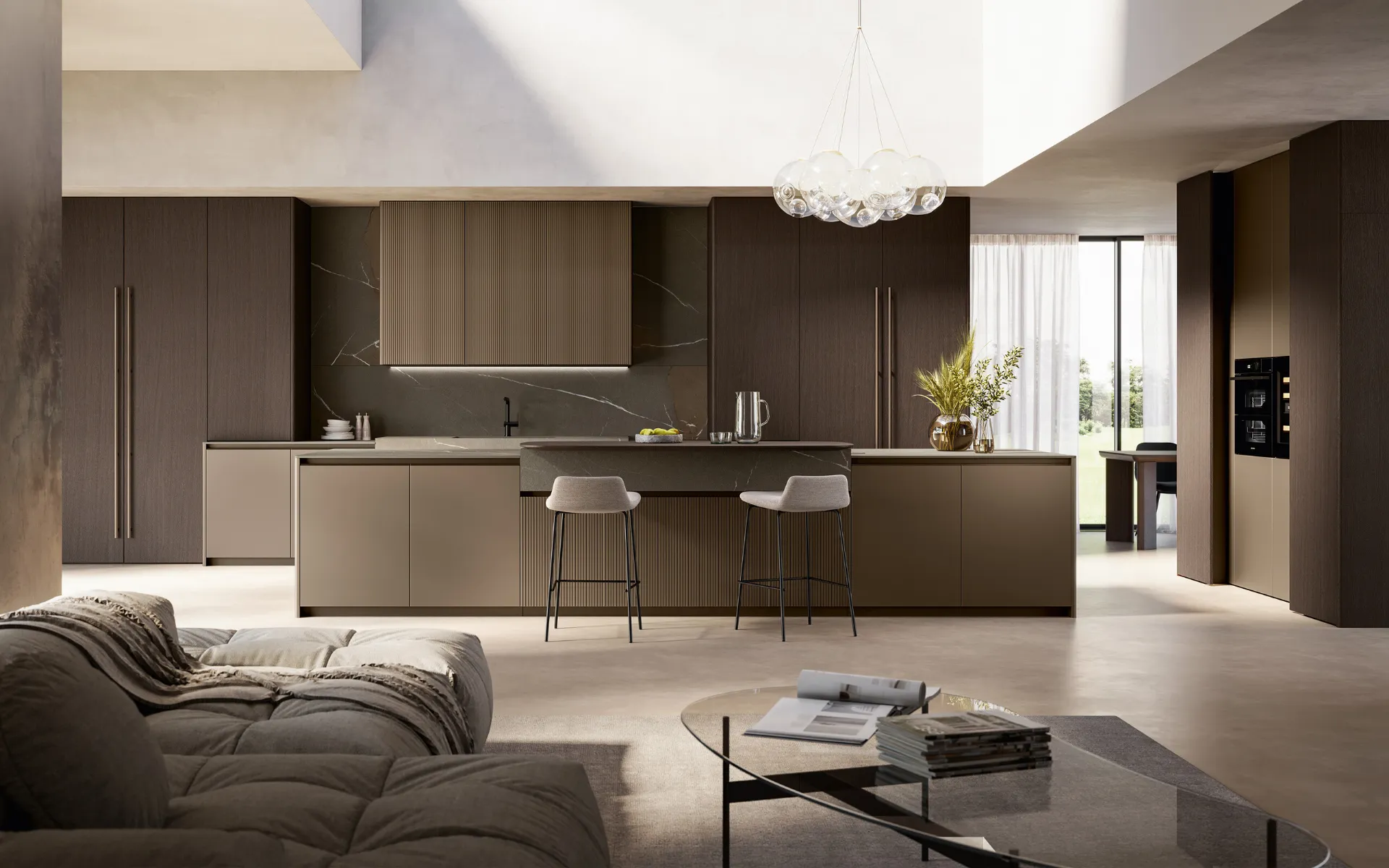
Open plan kitchen and visual continuity
The kitchen island thus assumes an almost architectural role: it defines without separating, accommodates functional needs, and simultaneously becomes a place for conviviality. Cabinets tend to blend into the walls, appliances disappear behind coordinated paneling, and typical kitchen elements increasingly meet those of the living area. Shelves, wall paneling, open compartments, and sideboards contribute to creating a unified design language.
Color follows this direction as well. Alongside neutral tones, intense greens, deep blues, earthy nuances, and spicy shades emerge, used to give personality to volumes without compromising overall balance. In this context, custom design becomes essential: the team of interior designers at Rusconi Arredamenti supports the client in studying the kitchen and its relationship with the living area, identifying configurations, proportions, and solutions capable of enhancing the specific features of the home.
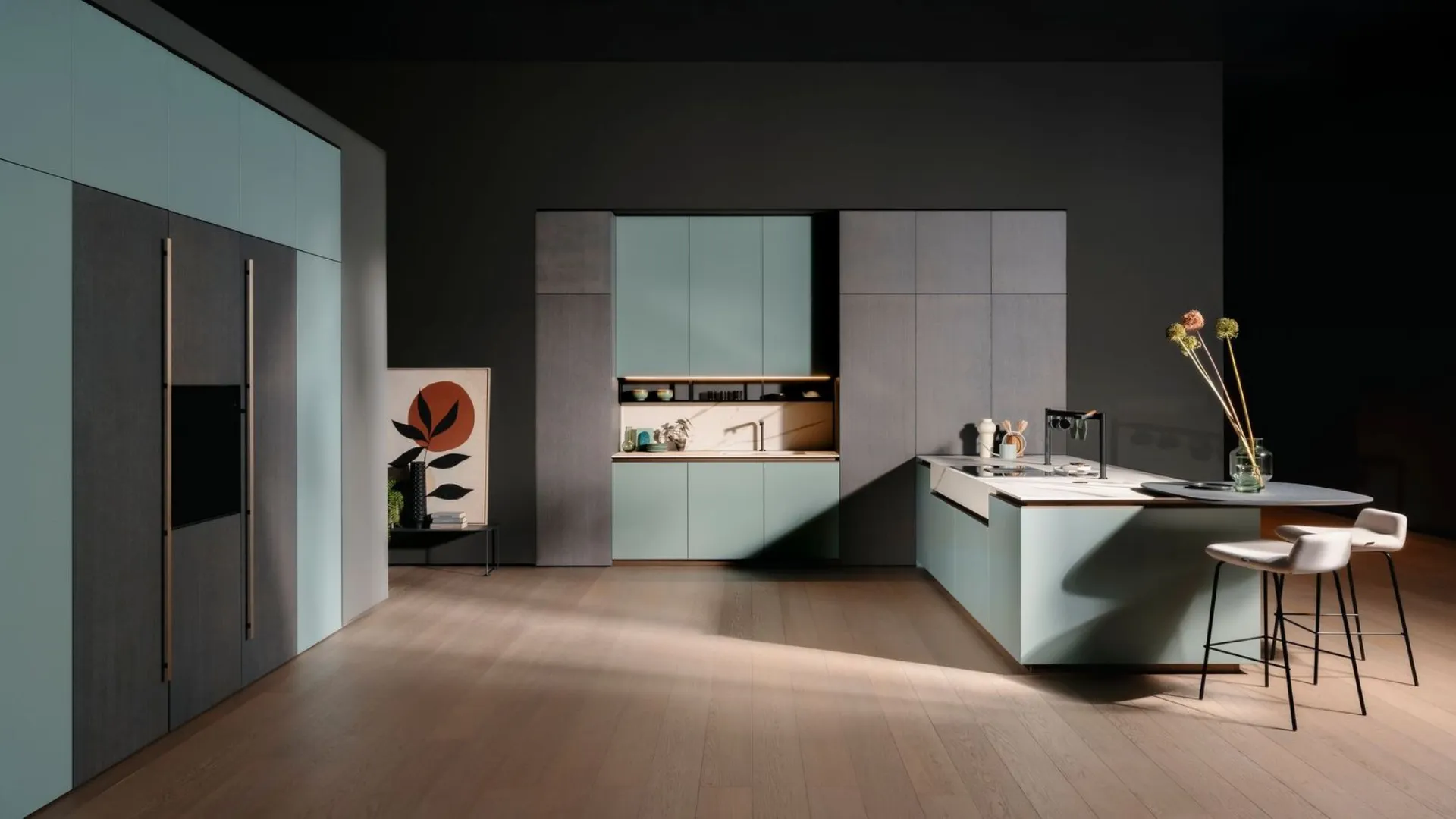
Hi-tech materials and natural inserts
The kitchen thus becomes an environment to be perceived through touch as well. Textures, veining, and three-dimensional surfaces are progressively replacing the uniformity of perfectly smooth finishes. The palette accompanies this search for materiality: alongside beige and neutrals, we find olive green, forest tones, terracotta, cinnamon, and deep colors, capable of creating sophisticated pairings with woods, stones, and metals. It is precisely in the choice and combination of materials, colors, and finishes that expert advice plays a decisive role. At Rusconi Arredamenti, interior designers guide the client in building a palette consistent with the home's architecture and style, evaluating not only the aesthetic impact of the surfaces, but also practicality, durability, and ease of maintenance. The goal is not to chase a trend, but to interpret it to create a personal kitchen designed to last.
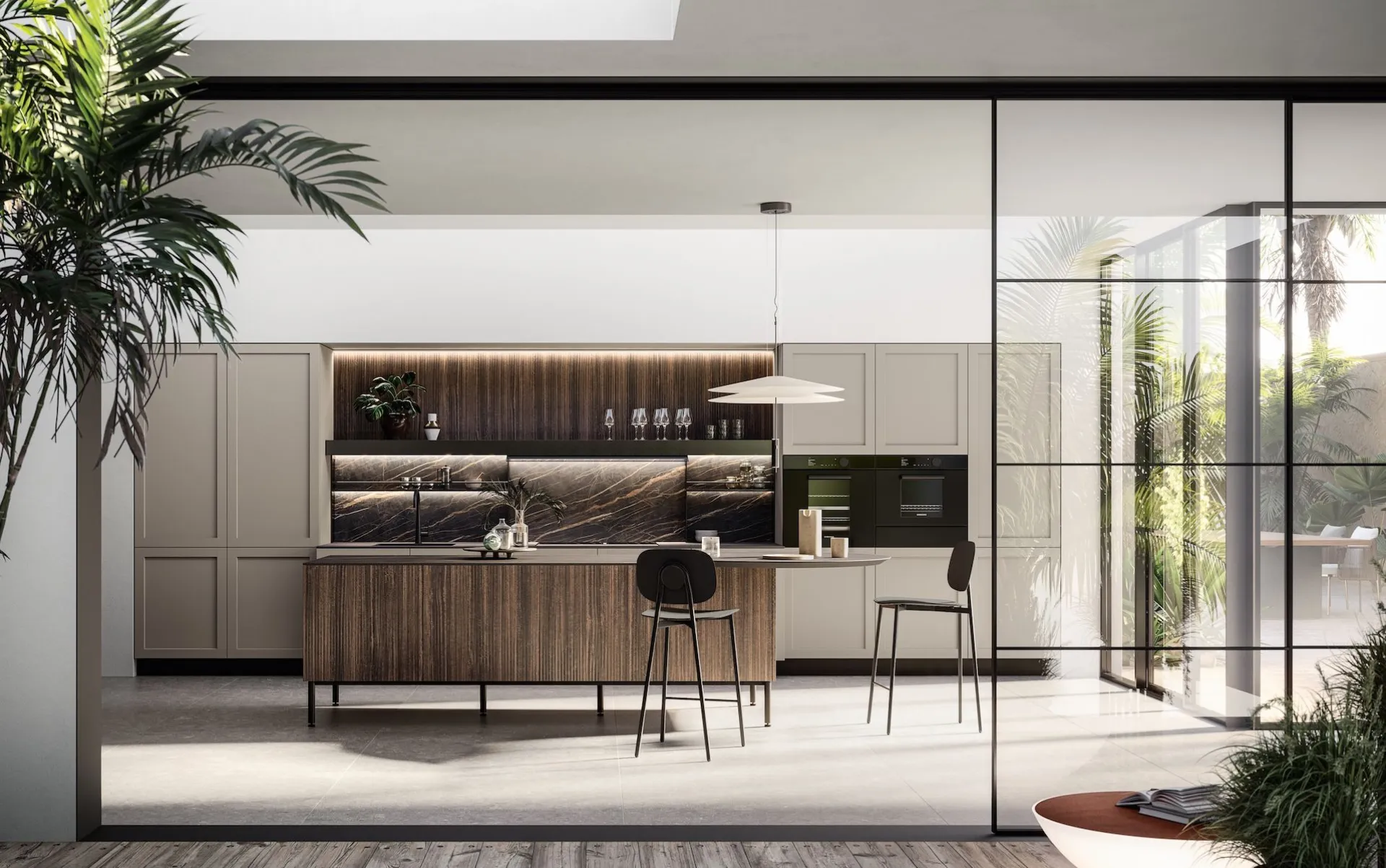
Design custom ergonomics
A kitchen can be impeccable from an aesthetic point of view and yet prove unpleasant to live in. This is precisely why contemporary design brings back to the forefront a fundamental principle: the kitchen must adapt to people, not the other way around. Worktop heights, depths, distances between washing, preparation, and cooking areas, door openings, and storage organization are all designed with the space and daily habits in mind. Bespoke design allows even a few centimeters to become a resource, eliminating unnecessary movements and making every gesture more natural. Pull-out pantries, fitted drawers, full-height columns, and advanced internal systems increase storage capacity without visually weighing down the composition. In larger spaces, however, islands and peninsulas must be sized considering proper circulation paths and the different activities that can take place simultaneously.
This is where the value of a project developed together with a professional truly emerges. The Rusconi Arredamenti team starts by listening to the client's needs, understanding how they use the kitchen, and analyzing the characteristics of the environment to create a truly personalized layout. Distribution, storage, appliances, worktops, and details are all considered as parts of a single system. Contemporary luxury thus becomes an almost invisible functionality, perceived in the simplicity with which each element responds to daily needs.
Integrated lighting
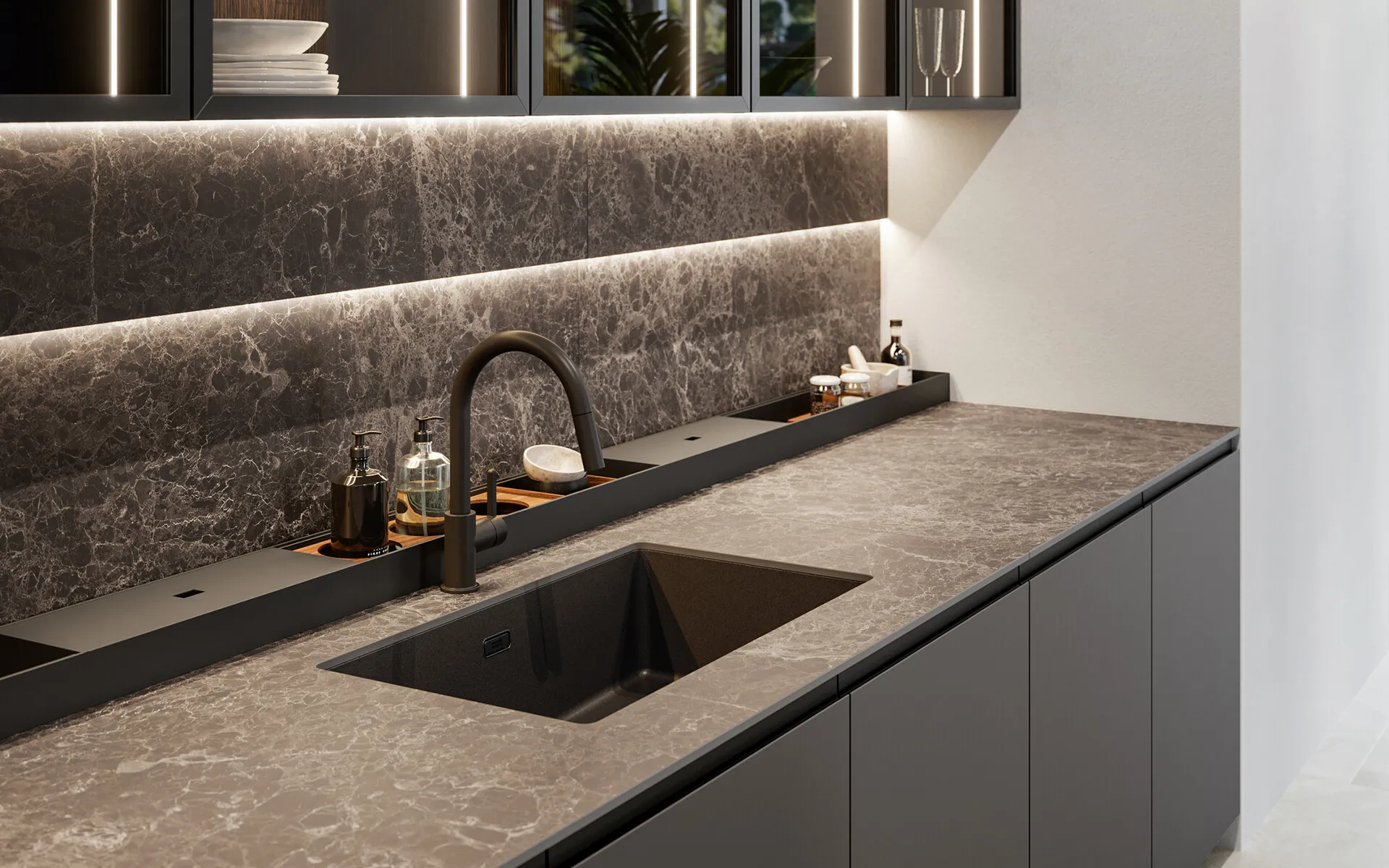
In contemporary kitchens, lighting is not a detail to be defined only after the design is complete. It is a true design material, capable of modifying the perception of volumes, enhancing surfaces, and supporting the various functions of the space. Integrated LED profiles under cabinets and shelves ensure proper illumination of the worktop, while light grooves and systems embedded directly into the furniture highlight geometries and materials without adding superfluous elements. Above the island or dining table, more decorative lamps can become sculptural presences and contribute to the identity of the environment. The most interesting projects arise from the layering of different levels: functional lighting in operational areas, ambient lighting for the space, and accent points dedicated to niches, wood paneling, display cabinets, and textured surfaces. In open-plan spaces, lighting also allows for the creation of a harmonious relationship between the kitchen, dining area, and living room. This aspect is also part of a holistic design approach. With the advice of Rusconi Arredamenti's interior designers, the kitchen is studied as a unified environment, where the arrangement of furniture, materials, finishes, colors, and lighting all contribute to the same result. A customized design approach that goes beyond simply choosing a kitchen, giving shape to a space built around the home and, above all, around those who live in it.